11/11/11


War would end if the dead could return.  
                                                                - Stanley Baldwin

Ellie's picture at the cenotaph -  it was on the front page of the local paper the next day.

Granddad on the right, Florence c. 1944


Still Here!

After a longer than intended hiatus, I am back to blogging.  I have been slogging away at some other projects - along with the usual work, home reno, and putting the garden to sleep for the winter activities - and they are nearing completion now, so back to England and Ancestry very soon.  We've had a gorgeous autumn on the East Coast this year, and I have added a new page of pictures today, full of candy-colored trees, that I've taken on walks around the city.  We've had our first snow already, just a few inches, but it stayed around for a couple of days which is never a good sign.  Fortunately, the gods have granted us reprieve with more warmer weather since.

Autumn Under Way

Zero degrees here this morning, and ice on the birdbath for the first time this season.   Yesterday there was a wind blowing hard all day, as you can see by the way the water froze with an uneven surface.


As beautiful as autumn is, there is nothing like the background dread that winter is making its inevitable march toward us.  And one sure sign that things are changing was having the dog hopping up to sleep under the covers with me last night for the first time since May.  Well, I say under the covers, but she soon got too warm for that, so I then had to endure the twisting and tangling as she rearranged things to her satisfaction.  Midway through the night, I awoke with only two inches between me and the edge of the bed, and the hound taking up the entire space on the other side.  It was all bony legs and loud honking and snoring as she wriggled about in her sleep; I felt like I was sleeping next to a set of animated bagpipes at that point.

Anyway, I haven't had a good block of time to get to some more family history research in the last couple of days, so nothing new to report on that front.  The little things I've been working on in spare half hours haven't amounted to much.

Kippered


Yes, it was another red herring after all.  But, I must say, it is fun chasing after them sometimes.

In the census of 1881, Elizabeth Durston (Pearce), she of the photograph, was living with her husband, children, and widowed mother in Weston Rd.

Simon and Elizabeth Pearce (not widowed), were both alive and living together on Easton Square.  So, there it is.  The woman in the photograph taken in 1931 is not Simon's & Elizabeth's daughter, so is not a close relation after all.  She just felt like it for 24 hours.

Old Simon and family looked like they must have been doing well for themselves though.  There was a "general servant" listed in the household census this time.


Red Herring in Black & White?


 Now just who does this remind you of?  Anyone at all?


When I saw this face quietly looking out of the computer screen at me this afternoon, I thought that it had to belong to someone with a bit more than a mere chance amount of shared DNA with Mum and Grandma W.  Look at that dear face.  I will find out exactly who you are, I said to myself.

But, I have ended up coming to a peculiar end to today's search after all.

Assuming that this person was Portland born, then I am almost certain that she is one of two people: either Isabella's first cousin, or, bizarrely enough, someone who lived in the house directly next to Isabella & Co., and was probably not a close relation at all.  The only two Elizabeth Pearces in the right age range listed on the 1851 census - and I checked the entire Isle - were these two girls.

The note that goes with the photograph on the "Portland Image Project" website is as follows:

Elizabeth Durston (Pearce)  
Taken in back garden 78 Weston Rd.  Age 89 11 October 1931.  Photo taken  31 October 1931.

**Skip this next part if you really don't care about the back-and-forth, logic game that ancestral research is.

**[So, to start with, I tried to find a record of an Elizabeth Pearce born in October of 1842 (which would be the date if she was 89 in October 1931).  There was no sign of her in the Portland baptism records though.  The closest, and only record I could find, was of an Elizabeth baptized 8 May, 1843, daughter of Simon and Elizabeth Pearce.  Perhaps they waited a few months to baptize her, for unknown reasons, or the photo note was just wrong.  Being the first route I took, and ever hopeful, I thought briefly that the person I was seeking was indeed Simon & Elizabeth's child (Simon being Abel's brother/Isabella's uncle).

Then I checked the FreeBMD catalogue and found the birth of an Elizabeth Pearce registered in Weymouth in September 1843, and a second one in December 1842 (no names of the parents though).  Rats.  This second one was probably the woman in the picture after all.

In the 1851 census, Simon & Elizabeth Pearce were listed at 24 Easton St.  And in the Village of Weston, there was an 8-year old Elizabeth Pearce living at 19 Weston Rd. with her family - parents being John and Elizabeth Pearce, but John being 5 years too old to be Simon's and Abel's brother John.

I performed the eye-aching search of all the census records for 1851 to see if there were any other Elizabeths besides these two living in Portland.  There were not.]
*****


Then, onward to the 1861 census, and what did I discover?  John and Elizabeth Pearce and their five children (including the aforementioned Elizabeth), lived next door to Abel & Mary and the three girls still at home!

What on earth were the odds, even for Portland?  So whoever it turns out to be gazing at us out of that photograph, she knew Isabella.  But is she Isabella's cousin, or the girl that lived next door?  It is an unsatisfactory end to the quest of the day, especially considering the family resemblance.  I so wanted her to be Simon's daughter.  I'll keep at it tomorrow.

As in science, geneaology is a continuous exercise in proving your ideas wrong in order to find the correct answers.

Anyway, it's the Witching Hour here now, and my head needs a rest, so I had better go and see if the hound needs to go out in the pouring rain once more, then to bed.


When the Skies of November Turn Gloomy


                     Artist: Corey Arnold, Title: Gulf Crossing, 2008 - click to close window


Does anyone know where the love of God goes 
when the waves turn the minutes to hours?
                              Gordon Lightfoot, Wreck of the Edmund Fitzgerald


In the past eight years, I have dodged at least four hurricanes between Cape Cod and Halifax (when they'd altered course away from wherever I'd been), but in each case everyone had plenty of warning of what was oncoming, as did all shipping traffic, so appropriate steps could be taken to minimize damage and loss of life.  These days, we often have up to a week's notice before a hurricane makes landfall, and ordinary citizens are able to track it on the National Hurricane Center's website for themselves.  This, along with a steady feed of media obsessing around the weather day after day, makes us barely able to imagine what it was like twenty years ago, never mind three or four hundred years ago, for the sailors and coastal communities whose lives were directly affected by extreme weather, and who had virtually no warning before the gales and high seas hit.

In the last couple of days, I've been reading about the storms and wrecks that most affected Portland and surrounds in the past.  The very worst of the storms -and there were some horrifically destructive ones - all occurred in November.  I was launched on this quest after reading one of  Elizabeth Pearce's journal entries in Old Portland, in which she describes her state of mind on her 14th birthday (January 9th, 1796).

...I somehow felt older this winter; it has been so sad.  The storms have been terrific, especially one in November.  And the most terrible thing chanced here that has happened since the old, old days when the Danes used to land in the night (or the French), and burn and kill all before them.  A lot of men-of-war got in our bay in the storm; and once in, they couldn't get out, or keep off the dreadful rocks.  The long cruel swish of the waves, and the jagged rocks!  Good God, but it was awful!  I hear them every night when I lie down...
Over a thousand poor souls perished...
And none of us have had heart for anything since.  Every time the wind rises, we look at each other and turn pale... We put up no holly nor mistletoe, and the mummers had no heart in them.  We wished each other a happy new year from our hearts, hoping never to know such another winter.  And Wyke churchyard is getting very full; for they bury the poor washed up bodies there. 
The storm that Eliza is referring to was a hurricane that came careening into the Dorset coast on the 17th-18th November, 1795.  There was a naval fleet of ships (these were Eliza's "men-of-war"), heading from Portsmouth to the West Indies that got tangled up in it that day on their way to "fight the French".  [The arch-enemy, Napoleon, had yet to meet his Waterloo.]  And it was these unfortunate souls who accounted for most of the casualties.

Before this, there was an even mightier storm on the 26th of November, 1703.  This was probably the most destructive thing to hit England right up until the days of the Third Reich.  Daniel Defoe described it as being "like an Army of Terror in its furious march".  Between Cornwall and the Wash, an estimated 8,000 people were killed.  This storm is still considered to be the worst one in British history.

Another infamous November hurricane was a killer known as the Great Gale of 1824, that smashed into Devon and Dorset on the 22nd-23rd of November of 1824.  This is the one that was immortalized in Moonfleet.  [And for my young relations in Canada who haven't yet read this - you're all getting copies of it for Christmas.  I first read this when I was 10 or 11 (and I got it for Christmas, come to think of it), and did such a fine book report on it for school, that it was put on display in the library - where we can be sure that no one else ever looked at it.]  The Fleet was flooded in the surf that broke over Chesil Bank in the massive storm surge; reports say that sea water was as high in the Fleet as the bank itself, which is very difficult to imagine if you've seen it.  The ferry house for Portland was inevitably washed away and the ferryman drowned, along with many others from the ruined villages.

P.S.  Here's the rest of the song, now that I've put it into your heads.   I found out today that I can put a YouTube video right on the blog page instead of adding a link.  This one is a family favorite when the guitars are out and the talent gets going.


Picture credit: http://www.richardhellergallery.com/dynamic/artwork_detail.asp?ArtworkID=1178

In Peril on the Sea


It was rather a busy day and I didn't get to any genealogy research, but I have recently discovered this absolutely wonderful painter in my quest for a certain sea captain that may or may not be related to us.  And since my head is full of shipwrecks and storms at sea all the time these days, I really must share some of the gorgeous work of the Armenian-Russian Romantic painter, Ivan Aivazovsky.  I had never heard of him before this week, and now love his work. It's easy to imagine any of these scenes taking place around Portland Race or the nearby coast.


 Иван Айвазовский. Тонущий корабль. 
 Ivan Aivazovsky. Shipwreck.


 Иван Айвазовский. 
 Кораблекрушение у скал. 
 Ivan Aivazovsky. 
 Shipwreck at rocks.
http://www.tanais.info/art/en/pic/aivazovsky

330 Years and Counting


Portland and The Ferry; view of the Isle of Portland connected to the mainland to r by the narrow Chesil Bank, from which an irregular tongue of land juts towards the foreground, sheltering two beached cutters, with a ferry boat crossing towards the ferryman's house built on part of the shore projecting from the foreground to l, and the white Portland cliffs in the distance. 1819
Watercolour
John William Upham 1819, Portland and the Ferry


Yesterday proved to be very interesting, research-wise.  I came across a series of old postings on a geneaology site from 2001-02 that were all about our Pearces.  If it is still possible to contact the person (who would appear to be a distant cousin in Ohio) through the email address she used ten years ago, then I may soon have a lot more to report.

In the meantime, I have taken the information that was being messaged back and forth with others, which we can reasonably take to be true, as it is unlikely that people make things up for their own entertainment on these genealogy sites, and added it to the "Known So Far" page, if you'd like to see how much further this has taken me now.  Obviously, until I can see records for myself, I cannot confirm any of this data, and there may have been new facts learned later that these people exchanged among themselves.

So.  We are back to 1680 now, with a marriage in Wyke Regis, and then one in Melcombe Regis two generations later.  These are the first records of events for our line of Pearces off the Isle of Portland.  In those days, you had to take a ferry to get across, as the bridge was not constructed until 1839.  You could go all around via Chesil Beach on foot, but it was not possible for horses, as they would sink in the pebbles.


[Later.]
Update: no luck with the distant Ohioan cousin - the email address is no longer working.  Foo.


picture credit: http://www.britishmuseum.org/

It's All Relative


It's only been 250 years so far, but I'm starting to feel like I'm half-way back to the ark here.  The further I go, the more disconnected and dizzy I feel at the thought that these people all belong to me.  Having grown up relatively relative-free on a separate continent from everybody else, this is beginning to do a number on my head.  We now have Fuzzards in the family.  I have never met a Fuzzard in my life, and now I find out I have Fuzzard DNA.

At the beginning, having everyone all contained on a tied island was immensely comforting to think about - how my relatives were lucky enough to have known each other and have shared history, and they must have had enough new blood introduced each generation to save them all from turning into daisies - but that containment seems to have blown open now, and a bit of chaos has entered.  Perhaps it's just that all of a sudden I'm wondering what I've got myself into.  That would be typical.

Or, perhaps I'm just overstimulated with everything today and need sleep.  I think I should go to bed now.


photo credit: http://www.mcescher.com/

First Day of Autumn

If I wasn't so happy with the way this day has gone, I would be mourning the end of another summer today, but it has been gorgeous here - the leaves have just started to change color this week, and it's been hot and humid - AND... I have my Portland book.

Elizabeth (Eliza) Pearce was a hoot.  This I can tell, and I only got to page 20 before going into work.  She starts off keeping a journal when she is only 11, and she remarks on the year that has just passsed, Louis XVI having met his fate with the guillotine and all hell breaking loose in France.   There are only five other entries before her seventeenth year when she is 'grown up', and "there is much I don't like in this; for I must give up my tomboy ways, they tell me.  I do love jumping and running on the stone trollies, when none is nigh to see."  We have a free spirit here.

Back to it then.  Morning will come fast, and a 12-hour shift with it.

O Happy Day!

Incredible.  I still cannot believe what has come into my hands today: a book that Mum had, called Old Portland: the eighteenth and nineteenth century Memoirs of Elizabeth Pearce (later White) and Clara Jane White (later King Warry) of Portland Isle, Dorset.

!!!!!!!  Just when I was bemoaning the fact that I wasn't finding anything about the women of Portland, I now have a mother-lode of information.  It is jam-packed full of riches.   And will this Elizabeth Pearce be one of our Pearces?  That would be too much to hope for, but I'll settle for distant cousin.

I must get back to it now, as I have to go into work for a few hours soon.

Snake Stones

Fossil ammonite


...a thousand snakes each one
Was changed into a coil of stone
When holy Hilda prayed.
                                    Sir Walter Scott


A.R. introduced me to a new term yesterday: snakestones.  This is what fossil ammonites used to be  called.  Until natural historians started coming up with some better explanations for the existence of fossils (and there were some clever ones along the way), it was left to legend to explain their presence.  In the north, the Saxon Abbess of Whitby, St.Hilda, was given credit for turning a plague of snakes into stones.  Whether belief in her powers reached as far as the Isle of Portland is unknown by me so far, but ammonites were called snakestones in Dorset too.

After looking at the pictures of some of the fantastic fossils that had been dug out of the quarries, I have been wondering what Portlanders thought about these curious things.  Dealing with them first hand in their daily labors would mean that they had to have had some pretty definite opinions on the matter, one would think.

More on this topic soon.  


What is also becoming patently clear is that I am not going to find out an awful lot about the women and girls of Portland - other than maternity-related facts - as it's the men and their labors that have (as per boringly usual), been the stuff of historical record.  What were the women all doing day after day while the men were killing themselves hammering rocks out of the earth's crust?  Were there any Mary Annnings among my distant cousins scrabbling about collecting fossils?  Writers, chroniclers, quiet thinkers working in a shop that never got an inch of inkspace allotted to them for posterity?  What were the women who worked in the quarries doing?  Portlanders were reported to be such independent spirits, so was it the women that provided the collective backbone?   Probably... but how will I find out in what way?  


Burying the Dead

Looking along the branches to Isabella's siblings today, I found out that two of the children of Mary & Abel died very young.

Abel (the son), who was baptized October 31st, 1841 appeared on the St.George's burials list on October 10th, 1843, aged 2.   And William John Abel, baptized August 24th, 1856 was buried December 16th 1857, aged 17 months.

Poor old Mary had been popping out sprogs from 1839 to 1859, and lost at least these two.


It was fascinating to look through the St. George's burials lists and see such entries as:  "A man unknown found drowned, washed up Chesil Beach"; or, the body of an infant "brought ashore from HMS Palmillon"; or "Thirteen males cast on beach drowned", and two days later, "Five bodies of males cast on this beach".  The latter two entries were obviously following a shipwreck.

I wonder how many people ever found out that their sons/husbands/brothers were carefully buried, "unknown", in a Portland cemetery.

The Quarrymen


The quarrying of Portland stone, that beautiful, creamy white limestone that has been sliced out of the Jurassic rock of the Isle of Portland since Roman times, or before, provided the livelihood for the men of the family in the generations I am getting to now.  From the outset, I thought that I would get all caught up in tales of the dodgers of the Excise Men in the early 19th century, but I find myself much more interested in the quarries and quarrymen after all.  I did re-read Moonfleet a few weeks ago, but the smugglers are on the back shelf for now.

Really, I could write an entire essay, or several essays, on the history of different aspects of quarrying this famous stone, but I must refrain and try and keep a little more focused on one project at a time: genealogy, not geology!  So I won't airily throw around terms like, curf and chert, or ooids and skull cap, as though I had not just been introduced to them.  Instead, I will give the briefest of commentary on this rock, for those (mostly on this side of the Atlantic) who do not know anything about it.


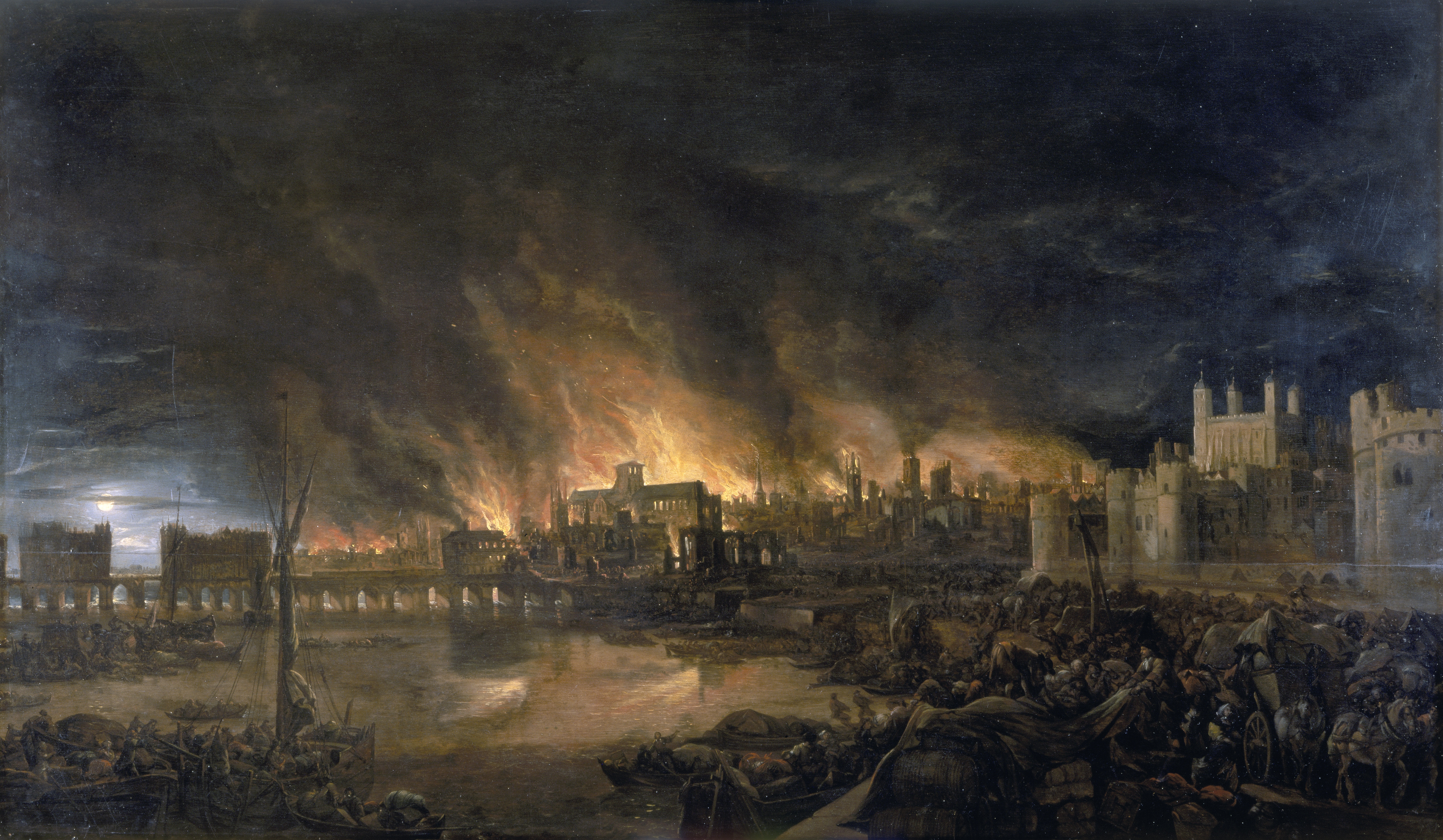
File:Great Fire London.jpg
Original St. Paul's in Flames
File:St Paul's by Thomas Hosmer Shepherd (early 19th century).jpg
Wren's St. Paul's Cathedral

After the Great Fire of London, in 1666, which destroyed hundreds of buildings, including the original St. Paul's Cathedral, Portland stone was used extensively in the rebuilding of London, as it would be again after the German bombings of WWII.  It was the architect of the new St. Paul's Cathedral, Sir Christopher Wren, who popularized its use, and he would even end up being elected as a Member of Parliament for Weymouth in 1702.   The stone has been famously used for Buckingham Palace, Waterloo Bridge, the Palace of Westminster, the Tower of London, the British Museum, the National Gallery, as well as Christchurch Priory and Salisbury Cathedral, and some of it was even hauled across the Atlantic to clad the United Nations building in New York City.

Many millions of tons of stone have been extracted from Portland over the centuries, and until recently, it was all done by men, not machines - and I'm just finding out about those of them that share my DNA.  From all accounts they were a fit and "intelligent-looking" bunch, which is reassuring to know.  It would be unfortunate to find out that I am descended from a brood of funny-looking inbreds. 
                                                
photo credits: http://en.wikipedia.org/wiki/File:Great_Fire_London.jpg
http://en.wikipedia.org/wiki/Thomas_Hosmer_Shepherd

Limelight

Best historical tidbit du jour: there are many disused lime kilns around Portland that were once employed in the production of quick lime.  Quick lime was combined with an oxy-hydrogen flame which produced a brilliant white light, used in spotlights in Covent Garden and the London theatres during Victorian times.  From this we get the expression: being in the limelight.


In my spare moments, I've been having a weekend of mapping, geology, engineering, and lots of history, and I have been boring everybody senseless with my discoveries about the Isle of Portland.  Most people, being East Coaster and fans of cross-border shopping,  have thought I've been researching Portland, Maine (named for Portland, Dorset, by the way).   I have quickly subjected them to an introduction to *my* Portland though.  The favorite story has been of the prison convicts building the breakwaters for the harbour.  It is a good tale.

It turns out that Isabella Pearce and family were from Easton Village, not Weston.  They were in Weston by the time of the 1871 census though, from which I had retrieved information earlier than these newest facts about Abel Pearces' family.

Not surprisingly, I have been bringing my  Grandmother back to life in my dreams - it's wonderful, and painful... she's back, then I wake up, and she's gone again.

photo credit: http://www.compulite.com/stagelight/html/history-4/limelight-spot.html

The Great Flood of 1968


This has not been a day for sitting still and researching, so there is nothing new of the Old to report.  I've been busy painting some outdoor trim, staining, refinishing an old wooden chair, putting in a window frame upstairs, and generally going into controlled panic about getting things done before the cold weather sets in for good.

Two nights ago it was hot enough to sleep with the windows open and no blankets; tonight, it is supposed to go down to 5 degrees.  <sigh>.  Vive le Canada.

To mix it up a bit then, I have serendipitously found out this afternoon that it was on this day in 1968 that our family set out on the first leg of the week-long journey to Canada.  It was the day after the worst of the torrential rains that culminated in The Great Flood of 1968 (which sounds like something out of "The Vicar of Dibley", but was not as funny).  There were delays and diversions and line closures all over the South East.  

                                       Empress of England.jpg

In a letter card to her parents from the S.S. Empress of England, Mum wrote on September 17th:

(Off Greenock)
Dear All,
     We finally made it!  After stopping & starting all the way we eventually arrived at Waterloo at 11:20 am.  We missed the boat train at Euston of course, alongt with quite a few others, but we were directed to the 1 pm for Liverpool (Lime St.).  There was a van waiing for all our luggage and we took a taxi to the ship.  We walked straight through all the checkpoints and were on  board at 4:15 pm.
     We all slept well last night after watching the ship leave L'pool at 7:30 pm.  Arrived here this morning early.
Much love from, us all.

Just imagine.  It's not exactly a report from a train journey to a death camp, but it makes my head spin in horrified circles at the thought of my parents with four small children and what they must have gone through hauling us all around the country, along with the worldly possessions that had not gone on ahead.  I have almost no memory of this journey at all, but there is a reason that I had a Titanic obsession from an early age.


Portland Churches


Time to get back to Portland.

I wished that I was within a short drive of Portland today.  When I was looking up the date for the demise of St.Andrew's church I found out all kinds of interesting things, and the hikes along the coast look spectacular.  Apparently there is a pirate cemetery beside the St.Andrew's ruins, though the gravestones are illegible.

Here are some key dates regarding the churches, those essential repositories of all information genealogical, which I found on a helpful site titled "Chronology of the Island of Portland 700 - 1905 AD": (http://freepages.genealogy.rootsweb.ancestry.com/~pbtyc/Portland/PYB/Chronology.html.)


1475. St. Andrew's Church dedicated.
1676. This is the earliest date decipherable on a tombstone in the old St. Andrew's Churchyard. The name on the stone is Attwooll.
1752. Last recorded burial in St. Andrew's Churchyard.
1754. St. George's Parish Church was begun in this year.
1756. Services transferred from the old St. Andrew's Church to the " Tabernacle" for ten years.
1764. The new church of S. George was completed.
1766 (July 29th). St. George's Church was consecrated by the Bishop of Bristol. King George II gave £500 to the Church. The register at St. George's Church dates from this year.


Baby Caroline


I haven't had time to find out much more in the last couple of days, except for one thing.

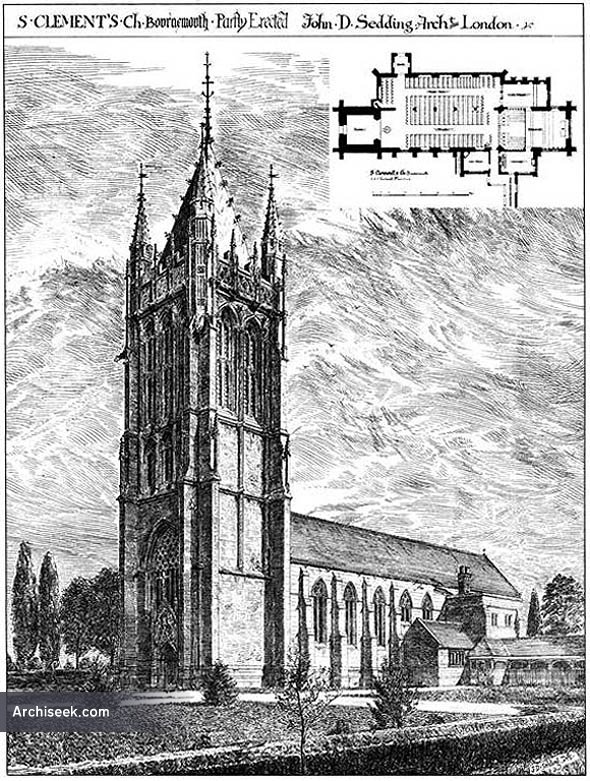
It looks very much like baby Caroline Hyde Adams did belong in the family.  When I went back and checked on the record of burial for baby William Pitt Adams (he who we also did not know anything about before - the brother of Thomas, and child of George with his first wife, Elizabeth Adams), I found that he had been buried at St.Clement's Church on November 21st, 1878, aged 3 years, and his abode was listed as Victoria Rd.

When I found Caroline Hyde Adams listed below, buried March 7th, 1890, aged 16 months, her abode was also listed as... Victoria Rd.

Surely, this is fairly strong evidence that this little girl belongs to us.  Once I get my hands on copies of all the birth and death certificates, these puzzles along the way will  get answers.

But!  There is still no sign of that Elizabeth Adams making an exit.  What became of her?  Why was she not buried at St. Clement's?  

I have just spent the last half hour going around Victoria St. and St. Clement's on Google Street View.  The houses on Victoria St. do not look old enough to be the original buildings.  When I went around Cranborne on  Google Street View last week, I could still see the old Adams family home there, although there were no civic numbers on the buildings, so I could only guess at which of three or four it could have been.  It was listed as 29 High St. in the censuses I checked in the 1800s, in case anyone else wants to have a look.  Isn't technology wonderful?


photo credit: http://archiseek.com/2009/1876-st-clements-church-bournemouth-dorset/

Reflecting A Bit


I think I have been spending too much time with ghosts and the dusty dead recently.  Here I was a few minutes ago, sitting peacefully at my computer, when I noticed a massive, shadowy, spidery creature - it was like something from a Tim Burton movie - walking across my ceiling.  It's a quiet reminder that the right lighting can eliminate all need for hallucinogenic drugs.


Anyway, the trespassing insect has been dispatched, and I am back to where I left off.  To weave the new with old a bit, I have added a picture of my hound (any excuse...).  This was taken a few days ago when my young relations and I went for our (probably) last swim in the sea for the season.  You can see Confederation Bridge in the background, which links Prince Edward Island to the mainland.

So, I have been talking with Mum today, who has corrected another few things I had wrong.  How on earth do people with no living relatives ever get anywhere with genealogy?  I suspect that most of them have been found dead beneath piles of the aforementioned red herrings, and since they have no living relatives, no one has even noticed that they've failed in their attempted research.

George's and Isabella's Children


Just some dry facts this morning.  It's a gorgeous day and I must get out and work in the garden before the thunder and rain forecast for this afternoon blow in.


This beauty in the photograph is George's and Isabella's firstborn child, Alice Mabel Adams, known in the family as Gangan, stemming from the inability of a child along the way  to say 'grandma'.   She has quite a look of one of my nieces about her.


In order of their appearance in the family, here are my Great-grandmother and her brothers:

Alice Mabel Adams, b. July 4th, 1880 (d.1964, Bournemouth)
Samuel Hyde Adams, b. January 1st, 1882, d. 1958
William Pitt Adams, b.October 24th, 1884
John Adams, born and died November 3rd, 1885
Frederick Harold Adams, b. March 26th 1887, d. 1957
Leonard Stewart Adams, b. December 13th, 1889
Reginald Augustus (or Augusta?) Adams, b. July 23rd, 1892

Two notes:
Here is the other William Pitt Adams, "Uncle Bill", who did live and breathe, and went off to Australia.  More on him when I get the facts.  I have some photographs of him that are most intriguing.  Hopefully there will be some Aussie relatives that we know more about.

And another item I have found is the record of a Caroline Hyde Adams on the St. Clement's Church burial list, who died 7 March 1890, aged 16 months.  George's mother was named Caroline Hyde, so this little girl is quite possibly a niece?